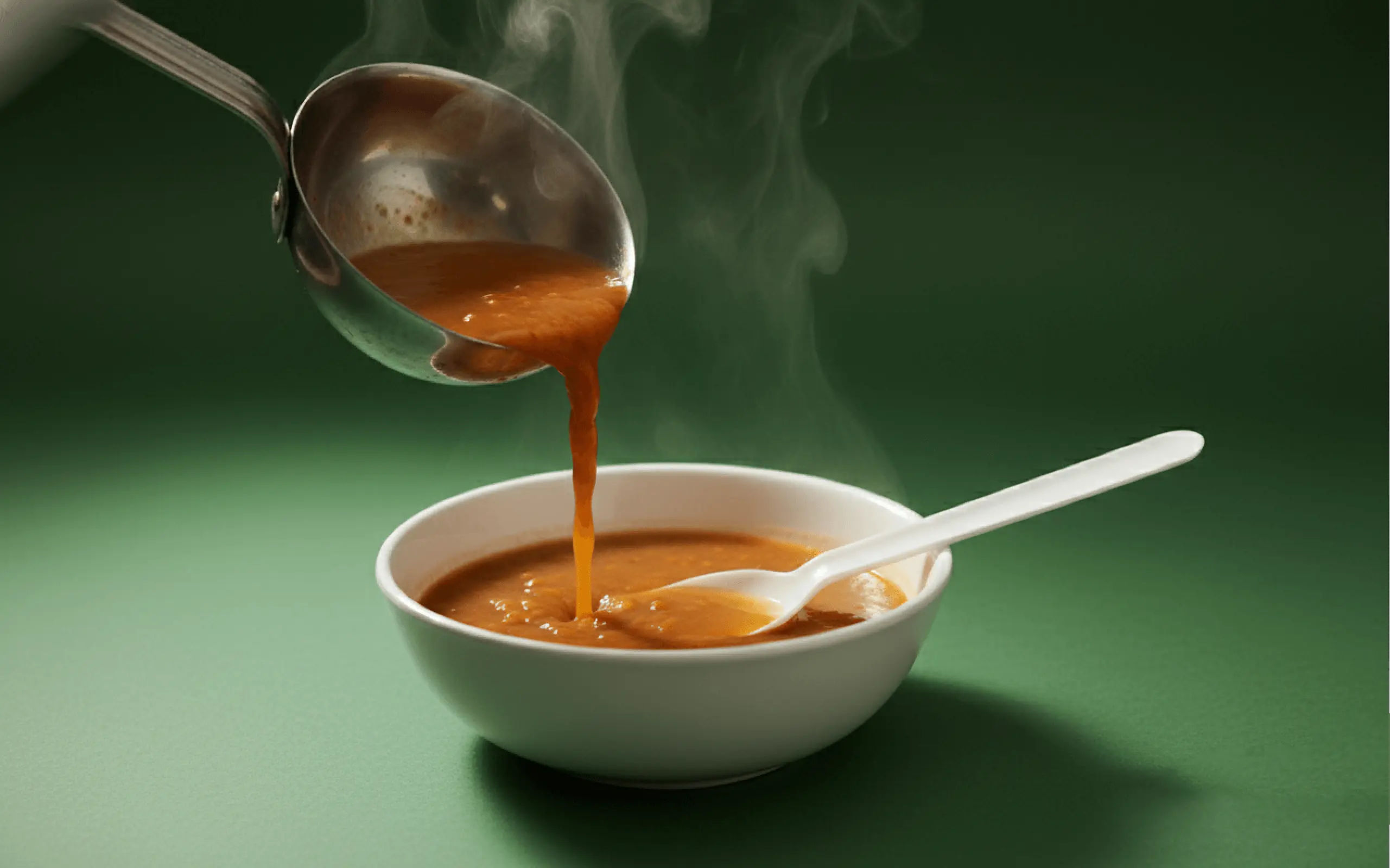
We have all been there. You order a premium hot Manchow soup or a freshly brewed coffee from a nice café, dip in the eco-friendly paper spoon, stir twice — and within two minutes the handle starts to bend. The bowl softens, feeling like wet cardboard against your lips. For a customer it is a minor annoyance; for a restaurant or cloud kitchen operator it is a disaster that signals “cheap quality” and often leads to negative reviews on Zomato or Swiggy.
But here is the truth most suppliers won’t tell you: the “soggy spoon” problem isn’t a failure of paper itself — it is a failure of cheap manufacturing. Not all paper cutlery is created equal. If you are weighing paper vs wood cutlery, you will notice a massive engineering gap between generic brown spoons and premium, high-density fiber. This guide explains the science behind why standard cutlery fails — and how Epherware’s 9-layer, high-compression technology solves it for good.
Key takeaways
● Soggy paper spoons aren’t a failure of paper — they’re a failure of cheap manufacturing (recycled pulp, only 3–4 layers, ~600–800 GSM).
● Low-density layers have microscopic air gaps that pull in hot liquid by capillary action — the “sponge effect.”
● Epherware bonds 9 layers of virgin, long-fiber food-grade paper, compressed to 1025 GSM — a “moisture lock” that keeps the spoon rigid.
● The Classic Paper Spoon weighs 3.2g and held its structure in 90–100°C broth without buckling or leaching.
Why do paper spoons get soggy in hot food?
The failure starts in the material. Most generic paper cutlery is made from recycled paper pulp, and every time paper is recycled its cellulose fibers get shorter and weaker. To keep costs down, manufacturers typically layer this short-fiber pulp only 3 to 4 times at a low density.
These loose, low-density layers behave exactly like a sponge. Because the fibers are short and the compression is low, there are microscopic air gaps between the layers. The moment the spoon touches hot liquid — soup at 90°C, for example — moisture is pulled into those gaps almost instantly by capillary action, and the spoon goes soft.
What is 9-layer bonding technology?
To replace plastic, we realized we couldn’t just make “paper spoons” — we had to engineer “fiber utensils.” Epherware cutlery is built from 9 distinct layers of food-grade virgin paper. Unlike recycled pulp, virgin fiber has long, unbroken cellulose chains that naturally resist tearing and breaking. Bonding 9 layers of these long fibers together with our proprietary water-based process creates a mesh that is exponentially stronger than standard options.
What GSM should paper cutlery be?
If you are a procurement manager, there is one number to ask your supplier for: GSM (grams per square meter). Standard paper spoons usually sit around 600–800 GSM — which is why they feel light and airy. Epherware spoons are compressed to 1025 GSM. This high-compression technique removes the microscopic air pockets where water enters, creating a “moisture lock” seal. It is also why our Classic Paper Spoon weighs 3.2 grams, well above the market average — that weight is the feeling of quality.
How does it perform in hot soup?
We believe the data says yes. In our quality-control lab in Gujarat, we ran a “torture test,” submerging the Classic Paper Spoon in tomato broth maintained at 90°C–100°C. Unlike standard options that lost rigidity within minutes, the Epherware spoon retained its structural integrity: the neck (the weakest point) stayed stiff enough to scoop heavy vegetables without buckling, and because the bonding is water-based, no glues dissolved into the liquid. You can see the full method and results in our 45-minute 100°C soup test.
Why does spoon rigidity protect your brand?
Your packaging is a physical representation of your brand. If you serve a ₹400 gourmet meal or a premium sundae, expectations are high — and if the spoon melts halfway through, it breaks the immersion. Customers subconsciously perceive the food as lower quality because the experience was frustrating. Rigid, 9-layer cutlery is an insurance policy for your brand: it keeps the last bite as good as the first, protecting your ratings on delivery platforms like Zomato and Swiggy.
Final thoughts
Your customers shouldn’t have to rush to finish before their spoon melts. With Epherware’s 9-layer technology, they don’t have to — it is paper cutlery designed to perform like silverware, with zero plastic and zero compromise. Stop serving soggy spoons; switch to the 1025 GSM standard.
Frequently Asked Questions
Why do paper spoons get soggy?
Because most are made from recycled pulp with short fibers, layered only 3–4 times at ~600–800 GSM. The loose, low-density layers have air gaps that pull in hot liquid by capillary action and soften the spoon. It is a manufacturing problem, not a paper problem.
What GSM is best for paper cutlery?
Higher is better for hot food. Standard spoons sit at ~600–800 GSM; Epherware compresses to 1025 GSM, which removes the air pockets and creates a “moisture lock” — one reason the Classic Paper Spoon weighs 3.2g, well above the market average.
What is 9-layer bonding technology?
It is Epherware’s construction method: 9 distinct layers of virgin, long-fiber food-grade paper bonded with a water-based process into a dense mesh that resists tearing and moisture far better than 3–4-layer recycled spoons.
Are 9-layer paper spoons safe for hot food?
Yes. In internal testing at 90–100°C they stayed rigid, and because the bonding is water-based, no glues dissolved into the liquid.
See the 9-layer difference
Don’t believe the data? Run the hot-soup test in your own kitchen. Request a free sample kit and feel the 1025 GSM difference for yourself.

Leave a Reply