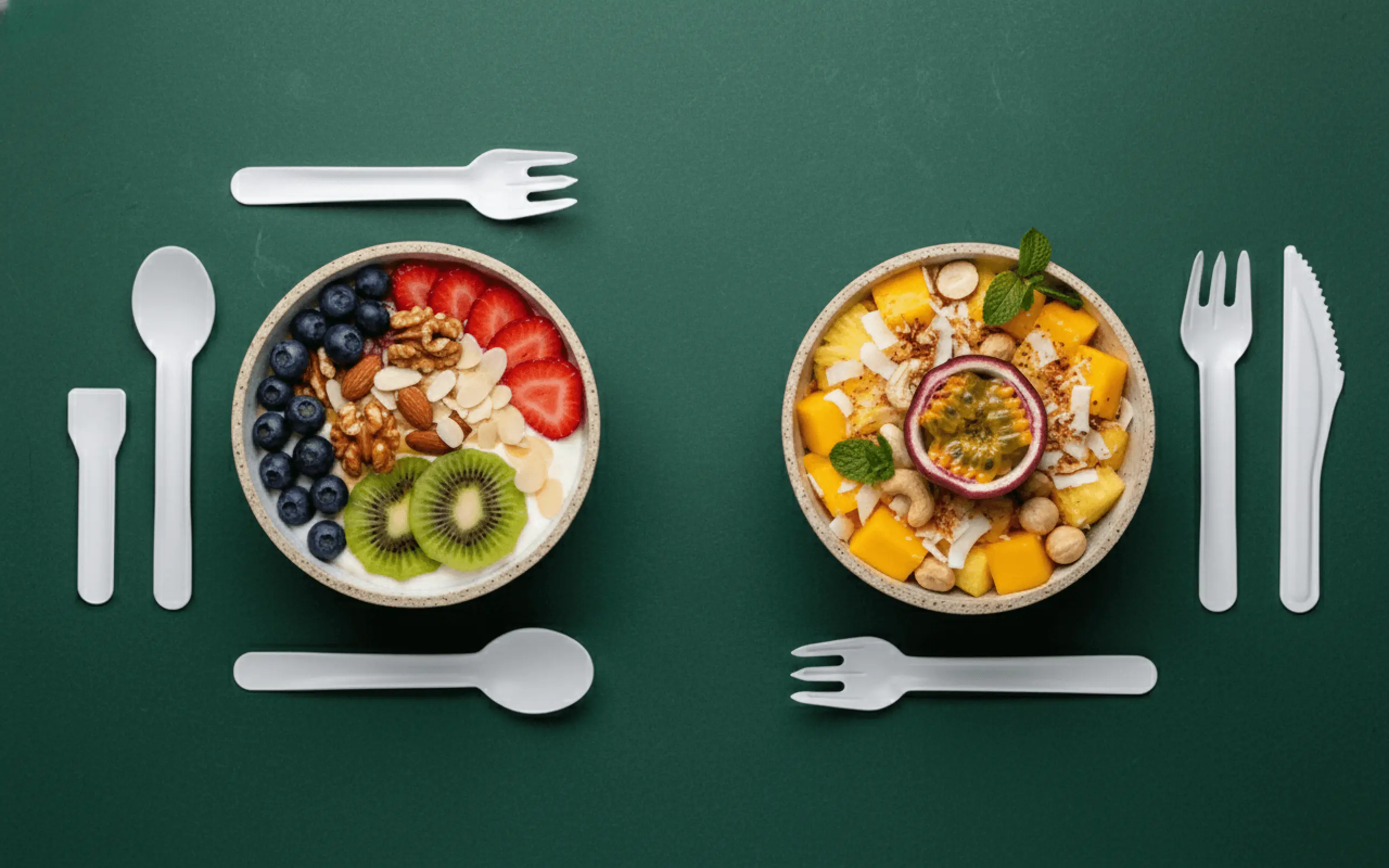
As a food business owner, you obsess over hygiene. You wash your vegetables three times, sanitize your kitchen surfaces every hour, and check your staff’s health daily — because you care about your customers. But have you ever checked the safety of the spoon your customer puts in their mouth?
In the global rush to ban single-use plastic, many brands switched to wooden cutlery, assuming it was the “natural” and safe choice. Unfortunately, the global timber supply chain is more complex — just because a spoon looks like wood doesn’t mean it is free from industrial processing.
Key takeaways
● Mass-market wooden cutlery is often chemically fumigated (e.g. sulfuryl fluoride or methyl bromide) to survive humid manufacturing and weeks-long ocean shipping.
● The uniform white look of cheap wooden spoons often comes from industrial bleaching with sulfur dioxide or hydrogen peroxide.
● “Natural”-looking does not mean chemical-free — trace residues can remain when manufacturing standards are low.
● Epherware paper cutlery uses virgin food-grade fiber, water-based FDA-compliant bonding, and elemental chlorine-free (ECF) processing — no fumigation, no harsh bleach.
The dirty secret: why wooden cutlery is fumigated
Have you ever opened a bulk sack of wooden spoons and smelled a faint, acrid odor? That isn’t the smell of “nature” — it is often the smell of chemical preservation.
Wood is an organic, porous material that holds moisture. When wooden cutlery is made in humid regions (like Southeast Asia) and shipped in damp containers across the ocean for weeks, it is highly susceptible to mold and fungus. To stop it rotting before it reaches your restaurant, mass-market manufacturers often fumigate the wood — treating it with gases such as sulfuryl fluoride or methyl bromide to kill pests and mold spores. These chemicals dissipate over time, but trace residues can remain when manufacturing standards are low.
Why is wooden cutlery so white? (bleaching)
Natural birchwood — the most common material for disposable cutlery — is not naturally uniform. It has dark spots, knots, and varying grain colors. Yet most wooden spoons you buy look perfectly pale and uniform. How? To achieve a clean, white look, cheap birchwood is frequently bleached using sulfur dioxide or hydrogen peroxide baths, which strip the natural color and hide imperfections in the wood quality.
Is Epherware paper cutlery chemical-free?
At Epherware, we believe safety should be the baseline, not a feature. Because we manufacture in India using a controlled, state-of-the-art process, we do not need to fumigate our products for trans-oceanic shipping like cheap imports. Our “Pure Fiber” philosophy means:
● Virgin fiber only: we use fresh, food-grade paper pulp — never recycled sludge that may contain ink residues.
● Water-based bonding: no toxic glues; we use a safe, water-based bonding technology that is FDA-compliant.
● No harsh bleaches: our paper is processed using elemental chlorine-free (ECF) methods.
Conclusion: protect your reputation
“Natural” doesn’t always mean safe. If you wouldn’t serve food with chemical residues, why serve it with a chemically treated wooden spoon? Your customers trust you to make safe choices for them — see how the options stack up in our paper vs wood comparison.
Frequently Asked Questions
Is wooden cutlery treated with chemicals?
Often, yes. To survive humid manufacturing regions and weeks-long ocean shipping, mass-market wooden cutlery is frequently fumigated (with gases such as sulfuryl fluoride or methyl bromide) and bleached (with sulfur dioxide or hydrogen peroxide) for a uniform white look. Trace residues can remain when standards are low.
Is paper cutlery food-safe?
Yes, when it is made properly. Epherware paper cutlery uses virgin, food-grade fiber and water-based, FDA-compliant bonding — with no toxic glues and no harsh bleaches (elemental chlorine-free processing).
What does elemental chlorine-free (ECF) mean?
ECF means the paper pulp is bleached without elemental chlorine gas, avoiding the harmful chlorinated by-products linked to older bleaching methods. It is a cleaner, safer way to process food-grade paper.
Does Epherware fumigate its cutlery?
No. Because Epherware manufactures in India with a controlled process — not shipped across oceans for weeks — there is no need to fumigate against mold or pests, so no fumigation chemicals are used.
Ready to serve chemical-free?
Give your customers cutlery you can stand behind — virgin-fiber, water-based-bonded, chemical-free paper cutlery.
Leave a Reply