If your kitchen still sends plastic spoons with delivery orders, this guide is for you. India banned single-use plastic cutlery in 2022 — and since 2025, enforcement has become much stricter. Here is what food businesses need to know in 2026, in plain language.
Key takeaways
● Single-use plastic cutlery has been banned in India since July 2022 — using it or shipping it with orders is illegal, not just making it.
● Since 2025, enforcement is strict: QR-code traceability, surprise inspections, and fines up to ₹1 lakh (with possible imprisonment).
● Compliant swaps: paper cutlery (best for hot food), wooden (has downsides), edible (niche/expensive).
● High-density paper cutlery (1025 GSM, 9-layer) handles hot dal, soup & biryani without going soggy and composts in 2–6 weeks.
What Exactly Is Banned?
Since July 1, 2022, India has banned the manufacture, sale, stocking, and use of 19 single-use plastic items. For food businesses, the relevant ones are:
● Plastic forks, spoons, and knives
● Plastic plates, cups, and glasses
● Plastic trays
● Plastic stirrers and straws
This is not just a ban on making these items. Using them in your restaurant or sending them with delivery orders is also covered.
What changed in 2025–26?
Enforcement got real. For the first two years many businesses treated the ban casually — that window has closed:
● Traceability: from July 2025, plastic packaging must carry barcodes or QR codes that trace products back to the maker — making banned items easier to spot in the supply chain.
● Inspections: pollution control boards and local authorities now run regular inspections and surprise checks, with task forces in every state.
● Penalties: violations can attract fines up to ₹1 lakh and, in serious cases, imprisonment under environmental law. Repeat offenders face stricter action.
For a cloud kitchen sending hundreds of orders a day, one inspection or even one customer complaint with a photo is enough to create a real problem.
What can I use instead of plastic cutlery?
Wooden cutlery
The most common replacement so far. It is compliant — but it brings operational problems: splinter risk, a woody taste with hot food, moisture absorption, and inconsistent quality between batches. Many wooden products are also chemically treated during processing — more on that in our guide to hidden chemicals in cutlery.
Paper cutlery
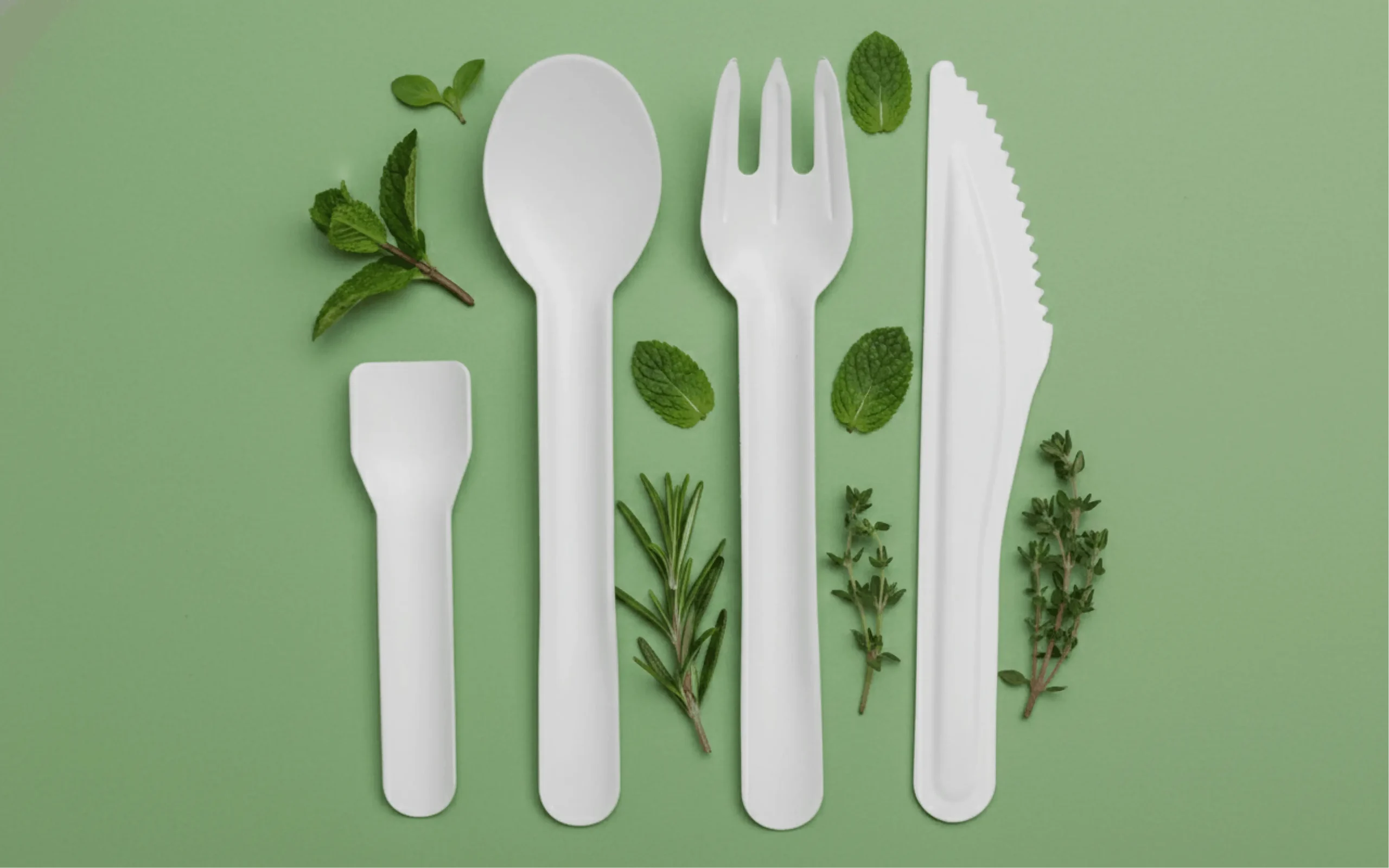
Fully compliant, plastic-free, and composts in 2–6 weeks. High-density paper cutlery (1025 GSM, 9-layer build) handles hot dal, soups, and biryani without going soggy — we tested it in 100°C soup for 45 minutes. It is smooth, taste-neutral, and can carry your branding.
Edible cutlery
Made from millet or wheat. Interesting for novelty, but expensive per piece, fragile in transport, and limited in shapes — impractical for high-volume delivery operations today.
For a full breakdown, see our paper vs wood comparison.
5-Point Compliance Checklist for Your Kitchen
1. Audit your packaging shelf today. If any plastic cutlery, stirrers, or straws are still in stock, they are a liability — banned items can’t legally be stocked, let alone used.
2. Check your current supplier’s documentation. Ask for confirmation in writing that products are plastic-free. “Eco-friendly” on a label means nothing legally.
3. Watch for hidden plastic. Some “paper” cups and “wooden” cutlery carry plastic coatings or are packed in plastic pouches. Ask specifically about coatings and packaging.
4. Switch before your stock runs out, not after. Lead times for bulk cutlery are days to weeks. A compliance scramble means paying rush prices or sending orders with nothing.
5. Keep purchase records. If an inspector asks, invoices from a compliant supplier are your simplest proof of good faith.
Make the Switch Without Disrupting Operations
Switching cutlery should not interrupt a single order. Stock products dispatch within 48 hours, and you can test before committing — we send sample kits so your team can try the cutlery in your actual dishes first.
Frequently Asked Questions
What is the penalty for using plastic cutlery in India?
Violations can attract fines up to ₹1 lakh, and in serious cases imprisonment under environmental law. Repeat offenders face stricter action, and from July 2025 QR/barcode traceability makes banned items easy to spot in the supply chain.
Is wooden cutlery legal in India?
Yes — wooden cutlery is compliant with the plastic ban. But it has real drawbacks: splinter risk, a woody taste with hot food, moisture absorption, and inconsistent quality between batches. Many wooden products are also chemically treated during processing.
Is paper cutlery allowed under the plastic ban?
Yes. Paper cutlery is fully compliant and 100% plastic-free. High-density paper cutlery (1025 GSM, 9-layer) stays rigid in hot dal, soups, and biryani, is taste-neutral, and composts in 2–6 weeks.
When did India’s plastic cutlery ban start?
India banned the manufacture, sale, stocking, and use of 19 single-use plastic items — including plastic forks, spoons, knives, plates, cups, stirrers, and straws — from July 1, 2022. Enforcement tightened significantly from 2025.
Ready to switch?
Try the cutlery in your own dishes before you commit — we send sample kits so your team can test it in your actual food first.
Leave a Reply